HIPEC & PIPAC Treatment in North Delhi — Dr. Raj Kiran
For women with advanced ovarian cancer or other gynaecological cancers that have spread to the peritoneum — the thin tissue lining the abdominal cavity — standard intravenous chemotherapy often cannot reach cancer deposits with sufficient concentration.
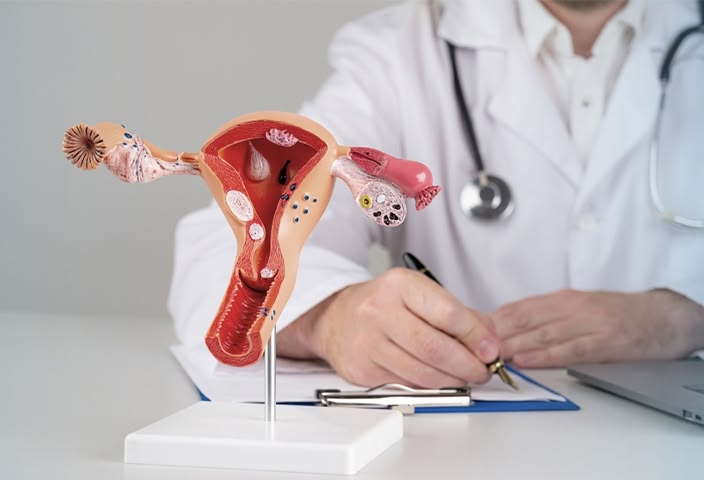
HIPEC (Hyperthermic Intraperitoneal Chemotherapy) and PIPAC (Pressurised Intraperitoneal Aerosol Chemotherapy) are two of the most advanced intraperitoneal chemotherapy techniques available today, each designed to deliver high-concentration chemotherapy directly to the site of the cancer with lower systemic toxicity.
Dr. Raj Kiran is a DrNB-qualified gynaecological oncologist in North Delhi who offers both HIPEC and PIPAC at BLK-Max Super Speciality Hospital, Pusa Road, and Max Super Speciality Hospital, Shalimar Bagh.
Understanding Peritoneal Cancer Spread
The peritoneum is a thin membrane that lines the inside of the abdominal cavity and covers the abdominal organs. Cancer that spreads to the peritoneum — known as peritoneal carcinomatosis or peritoneal metastases — is one of the most challenging presentations in gynaecological oncology. It occurs most commonly in:
Peritoneal spread was historically considered a sign of untreatable end-stage disease. The development of cytoreductive surgery combined with HIPEC — and more recently PIPAC — has significantly changed outcomes for carefully selected patients, improving both survival and quality of life beyond what systemic chemotherapy alone can achieve.
What Is HIPEC(Hyperthermic Intraperitoneal Chemotherapy)
HIPEC is a surgical procedure performed in two phases during the same operation. First, all visible tumour deposits are removed from the abdominal cavity — a procedure called cytoreductive surgery (CRS) or debulking surgery. Immediately after, before the abdomen is closed, heated chemotherapy solution is circulated directly inside the abdominal cavity for 60 to 90 minutes.
The heat (41–43°C) serves two critical purposes: it enhances the penetration of chemotherapy into residual tumour cells that cannot be surgically removed, and it has a direct cytotoxic effect on cancer cells, which are more sensitive to heat than normal tissue. The direct delivery into the abdominal cavity achieves drug concentrations that are 20 to 1,000 times higher than systemic intravenous chemotherapy — targeting peritoneal disease with a precision that IV chemo simply cannot match.
How Is HIPEC Performed?
HIPEC combines cytoreductive surgery with heated chemotherapy to treat cancers that have spread within the abdominal cavity.
Pre-operative Assessment
PET-CT/CT scans, PCI scoring, and tumour board evaluation help determine whether HIPEC is suitable for the patient.
Cytoreductive Surgery (CRS)
Visible tumour deposits are surgically removed to achieve the best possible cancer clearance before HIPEC.
HIPEC Delivery
Heated chemotherapy is circulated inside the abdomen for 60–90 minutes to destroy remaining microscopic cancer cells.
Closure & Recovery
After treatment, the abdomen is closed and patients are monitored closely, with hospital stay usually lasting 7–14 days.
What Is PIPAC?
PIPAC is a newer, minimally invasive technique for delivering intraperitoneal chemotherapy. Unlike HIPEC — which requires an open surgical procedure — PIPAC is performed laparoscopically. Two small ports are placed in the abdomen, and chemotherapy is delivered as a fine pressurised aerosol (mist) directly into the abdominal cavity using a specialised injector device. The pressurised delivery drives the chemotherapy more deeply into tumour tissue than standard liquid delivery.
How Is PIPAC Performed?
PIPAC delivers chemotherapy as a pressurised aerosol inside the abdominal cavity, allowing better drug distribution with a minimally invasive approach.
Laparoscopic Access
Small incisions are made to insert laparoscopic instruments and assess the abdominal cavity. Biopsies may also be taken.
Aerosol Chemotherapy Delivery
Chemotherapy is delivered as a pressurised aerosol, helping the medicine reach tumour surfaces more effectively.
Washout & Closure
After treatment, the aerosol is safely removed through a closed system and the small incisions are closed.
Recovery & Repeat Cycles
Most patients recover within 1–2 days and may undergo additional PIPAC sessions every 4–6 weeks if required.
Why Choose Dr. Raj Kiran for HIPEC & PIPAC in North Delhi
Advanced expertise in cytoreductive surgery, HIPEC, and PIPAC with a patient-focused approach for managing peritoneal cancers.
Subspecialty Gynaecological Oncology Expertise
DrNB-trained Gynaecological Oncologist with specialised expertise in HIPEC, PIPAC, and complex cancer surgery.
Rigorous Patient Selection
Detailed evaluation including PCI scoring, tumour board review, and realistic outcome discussions before recommending HIPEC or PIPAC.
Complete Cytoreduction Focus
Emphasis on complete tumour removal, the most important factor influencing successful HIPEC outcomes.
PIPAC for Better Quality of Life
A minimally invasive option for selected patients to help control disease and maintain quality of life.
Multidisciplinary Team Support
Every case is reviewed with medical oncologists, radiologists, anaesthesiologists, and cancer specialists for comprehensive care.
Two Advanced Hospital Locations
HIPEC and PIPAC procedures are performed at BLK-Max Super Speciality Hospital and Max Super Speciality Hospital, Shalimar Bagh.